
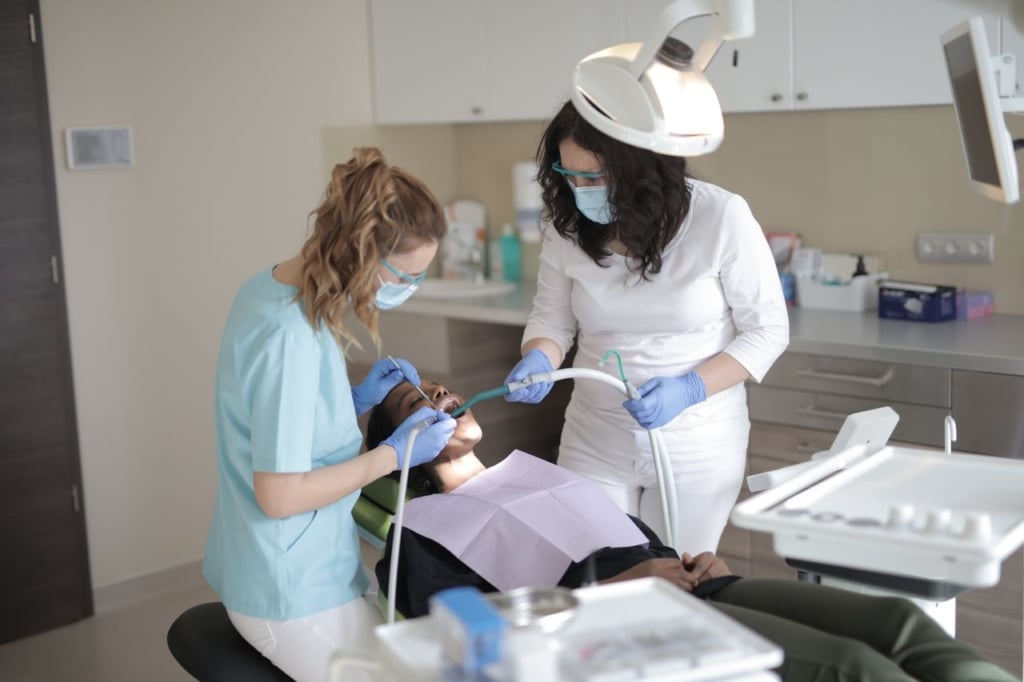
People choosing a new dentist are often anxious, in pain, or both. Nobody browses dental websites for fun. They’re comparing a handful of practices quickly, looking for enough reassurance to pick up the phone or book online.
A well-designed dental office website does a specific job. It builds enough trust that a nervous or uncomfortable patient takes the next step, and it answers the questions that would otherwise land on reception as phone calls.
Here’s what every dental office website needs to do that job.
Dental office website design starts with what you treat and who you treat
A first-time visitor needs to know within seconds whether your practice suits them. General checkups and cleans, cosmetic dentistry, emergency care, children’s dentistry, sedation for anxious patients: whatever your focus areas are, they belong on the homepage, not buried three clicks into an About page.
Practices that see specific groups well, families, anxious patients, older patients needing dentures, should say so plainly. A patient searching for a dentist who understands their particular situation trusts a practice more when it names that situation directly.
Practitioner profiles that build trust
Patients choose a dentist based on trust, often before they’ve had a single conversation. A good practitioner profile includes a professional photo, qualifications and areas of interest, and a short note in a human voice about how the practitioner works with nervous or uncomfortable patients.
For a dental practice specifically, this last point matters more than it does in most other medical fields. A practitioner who explains how they put anxious patients at ease is answering the question a lot of visitors came to the page with.
A smile gallery or before and after photos
This is the one feature that sets dental websites apart from other medical practice sites. Cosmetic work, orthodontics, and general restorative dentistry are all visual. Patients researching these treatments want to see real results before they commit to a consultation.
This is also the section to get right from a compliance point of view. The Australian Dental Association’s advertising policy and AHPRA’s advertising guidelines both treat before and after photos as having real potential to mislead, particularly for cosmetic dentistry. If you use them, get informed patient consent, show results that are representative rather than your single best outcome, and check current ADA and AHPRA guidance, or ask your indemnity insurer, before publishing a gallery.
Emergency and urgent care information
Dental pain doesn’t wait for business hours, and patients searching for help with it are usually searching on their phone, in discomfort, and in a hurry.
Make your emergency process clear: whether you offer same-day appointments, what patients should do outside your opening hours, and who to call for genuine emergencies. A practice that answers this clearly picks up patients that a vague or missing emergency page loses to a competitor.
Online booking or a clear next step
Patients expect to book online now. If your practice management system offers a patient booking portal, link to it prominently, ideally in the header, not buried in a menu.
If online booking isn’t part of your setup, make the phone number impossible to miss and clickable on mobile. Whatever your process is, the website should make the next step obvious. A nervous patient who has to hunt for how to book often just doesn’t.
Fees, health fund rebates and payment plans
Cost is one of the biggest reasons people delay dental treatment, and uncertainty makes that worse. Practices don’t need to publish a full price list, but should be clear about how billing works: whether you bulk bill any services, which private health funds you have HICAPS access for, and whether payment plans are available for larger treatment.
Patients who understand the cost picture before they call are patients who are more comfortable booking. Vague or missing fee information pushes people to a competitor who answers the question upfront.
New patient information
Every practice fields the same questions by phone: what to bring, whether forms can be completed in advance, where to park, whether the practice is accessible. A short new patient page that covers these saves reception real time and gives anxious patients one less unknown before their first visit.
Good dental office website design loads quickly and works on phones
Most people searching for a dentist, particularly for anything urgent, are doing it on their phone. A website that’s slow to load or awkward to read on a small screen loses patients who are comparing several practices in the same few minutes.
Mobile usability means readable text without zooming, buttons large enough to tap easily, and a phone number that’s clickable, not just printed on the page.
Google reviews connected to the website
Dental patients rely on reviews more than most. A practice with strong, recent reviews and a high rating earns trust before a visitor has read a single word of the website itself.
This is another area where AHPRA’s advertising guidelines apply.
Reviews that touch on clinical care, treatment outcomes, or a practitioner’s skill count as testimonials, and testimonials aren’t permitted in health service advertising. That applies to what a practice chooses to feature on its own website and social pages. Reviews about non-clinical things, such as friendliness, communication, or how easy booking was, are fine to use. You don’t need to remove reviews from your Google Business Profile, since that’s a third-party platform outside your control, but avoid handpicking clinical praise to display on your own site.
Make sure your Google Business Profile matches your website’s address, phone number and hours, and encourage happy patients to leave a general review with a direct link. Your website and your profile should be working together, not creating a compliance headache.
Need help?
Presstwood Design works with dental and allied health practices to build websites that put nervous patients at ease and take pressure off reception. If you’d like to talk through what your practice needs, get in touch.